Blake Schmid · 21 September 2026
Bubble Patterns in Engineered Snow: How Foam Structures Shape Training Protocols for Mountain Rescue Teams
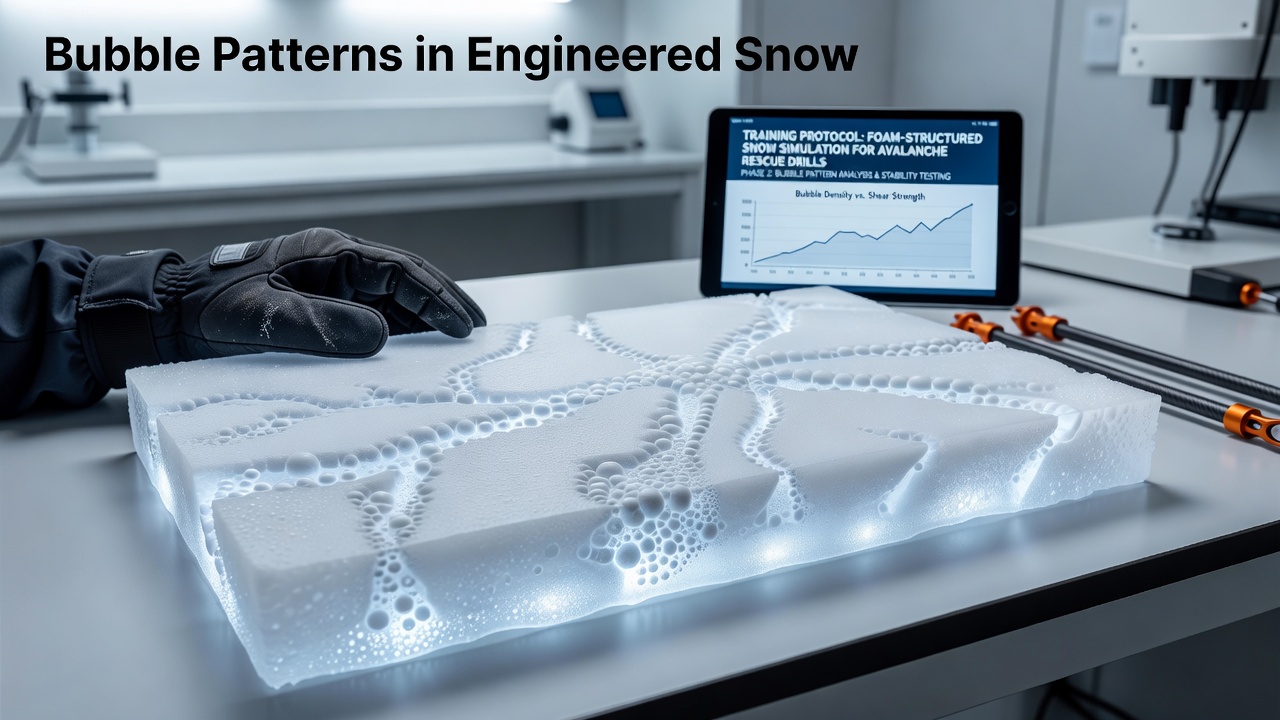
Engineered snow made from specialized foam materials replicates natural snow properties through controlled bubble patterns that determine density, shear strength, and thermal behavior, and mountain rescue teams rely on these structures to conduct realistic training exercises without depending on variable weather conditions. Researchers at institutions focused on materials science and avalanche dynamics have mapped how bubble size distribution and spacing alter the foam's response to stress, which in turn informs the design of training scenarios that simulate burial depths, probe resistance, and transceiver signal propagation through snow layers.
Composition and Bubble Dynamics in Foam-Based Snow
Foam formulations for engineered snow combine polymer matrices with gas injection processes that create uniform or graded bubble patterns, and studies from the Swiss Federal Institute for Snow and Avalanche Research demonstrate that smaller, evenly distributed bubbles increase compressive strength while larger clustered bubbles reduce it in predictable ways. Teams adjust these parameters during manufacturing to match regional snowpack profiles, such as those found in the Canadian Rockies or European Alps, allowing rescue personnel to practice on surfaces that behave like fresh powder one day and wind-packed slabs the next. Data collected from field tests shows that bubble pattern consistency across batches improves repeatability in training drills, which reduces variables that could otherwise skew skill assessments.
Integration into Rescue Training Protocols
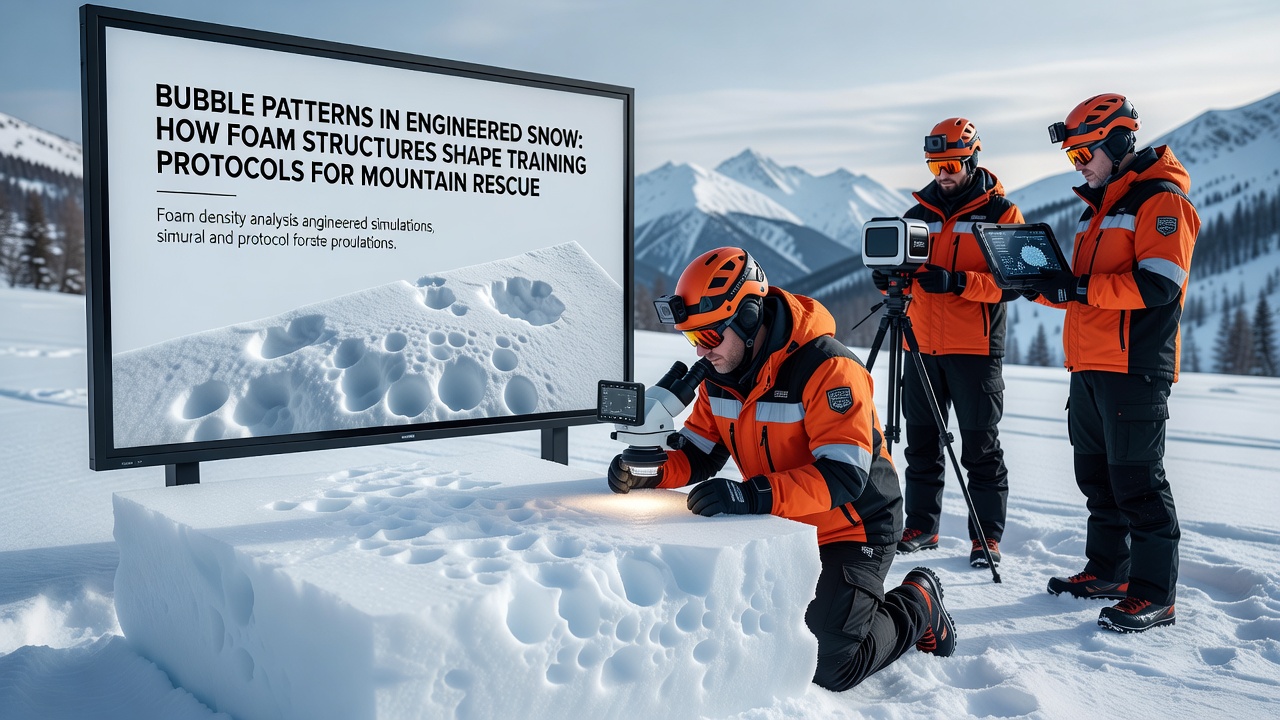
Mountain rescue organizations incorporate engineered snow blocks and slopes into indoor and outdoor facilities where bubble-patterned foam replaces natural snow during off-season periods, and this approach enables year-round practice of avalanche companion rescue techniques including probing grids, digging strategies, and organized search patterns. Protocols developed by groups such as the International Commission for Alpine Rescue now specify foam density ranges derived from bubble analysis, ensuring that trainees encounter resistance levels comparable to real avalanche debris while minimizing equipment wear and injury risk. In one documented program, teams using graded bubble foams reported improved accuracy in locating buried subjects because the material transmitted signals and allowed probe penetration at rates matching field measurements from actual snow events.
What's interesting is how bubble patterns also influence thermal retention within the foam, which affects how quickly trainees must work before simulated body heat signatures dissipate, and this detail has led to timed exercise modules that mirror the critical first fifteen minutes of a real incident. Observers note that facilities in regions with limited natural snow access, including parts of Australia and New Zealand, have adopted these foam systems to maintain certification standards without seasonal interruptions.
Updates Scheduled for September 2026
Training centers plan to roll out revised protocols in September 2026 that incorporate new bubble-pattern data from recent laboratory simulations, and these updates will standardize foam layering techniques used to replicate multi-day snowpack evolution during extended burial exercises. Research indicates that introducing controlled gradients in bubble size within single foam panels allows teams to practice distinguishing between soft surface layers and harder underlying slabs, which improves decision-making during live scenarios. Organizations coordinating across borders have shared datasets on bubble distribution effects, leading to harmonized guidelines that account for variations in regional snow types while maintaining core performance metrics.
Case Examples from Operational Programs
One European training site constructed modular foam walls with alternating bubble densities to simulate cornice collapse hazards, and participants completed search-and-extraction drills that measured both speed and technique under conditions that closely approximated field reports from past incidents. In North America, a collaborative project between university researchers and rescue associations tested transceiver performance through foam panels engineered with specific bubble spacing, revealing measurable differences in signal attenuation that prompted adjustments to recommended search strip widths. These examples illustrate how bubble pattern control translates into measurable training outcomes without relying on external weather dependencies.
Conclusion
Bubble patterns engineered into foam snow structures provide a measurable foundation for refining mountain rescue training protocols, and ongoing data collection from multiple geographic regions continues to refine density targets, layering methods, and exercise timing. Facilities adopting these materials gain consistent training environments that support skill development across seasons, while research collaborations expand the range of simulated conditions available to teams worldwide. As manufacturing techniques advance, the alignment between foam performance and natural snow behavior is expected to strengthen further, supporting more precise preparation for operational demands.