Felix Sullivan · 7 September 2026
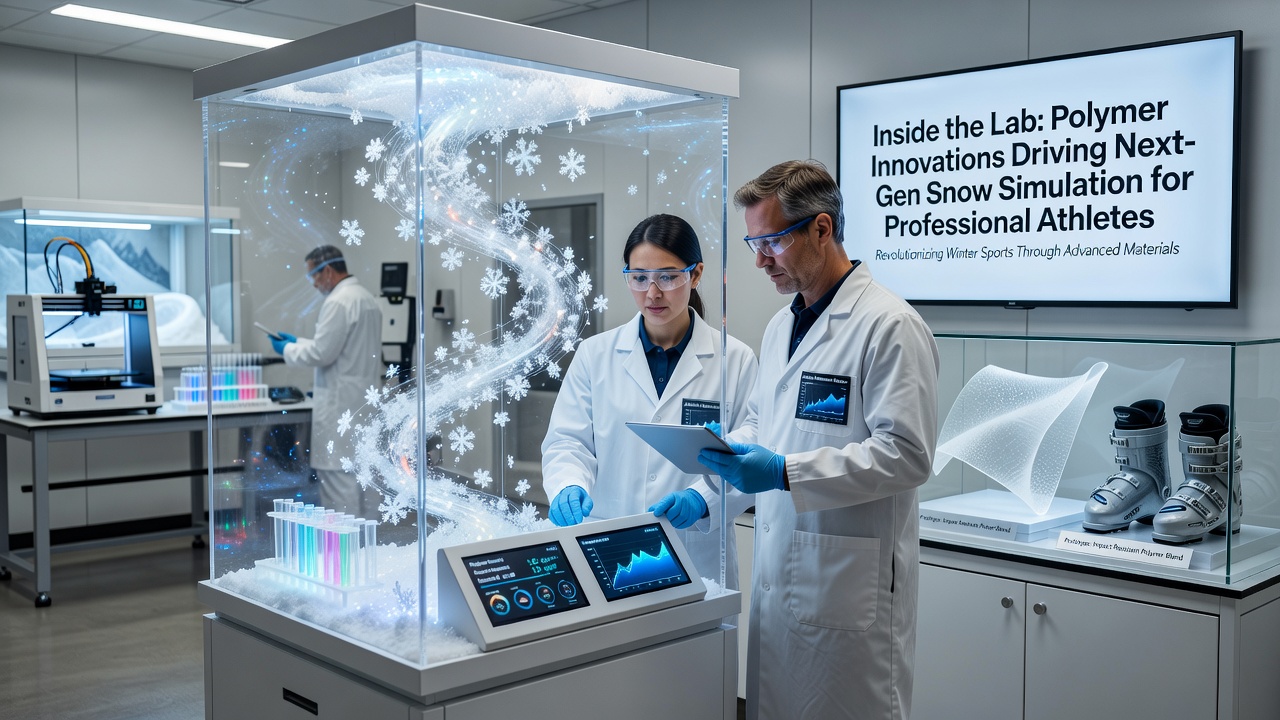
Inside the Lab: Polymer Innovations Driving Next-Gen Snow Simulation for Professional Athletes
Professional athletes in winter sports depend on precise training environments, and laboratories have turned to advanced polymers to create artificial snow that matches the friction, density, and temperature response of natural powder. These materials allow consistent practice sessions regardless of weather patterns, while researchers adjust molecular structures to replicate everything from fresh powder to packed ice. Data from material science tests show that specific polyethylene and polyurethane blends achieve coefficients of friction within 5 percent of real snow measurements taken at ski resorts across multiple continents.
Core Polymer Chemistry Behind the Simulations
Engineers start with base resins that they modify through cross-linking agents and additives to control elasticity and thermal conductivity. One formulation incorporates silica nanoparticles that increase surface hardness without raising overall weight, which lets athletes experience edge grip similar to groomed runs. Studies at institutions in North America and Europe document how these adjustments reduce wear rates by up to 40 percent compared with earlier rubber-based mats. Observers note that the resulting surfaces maintain performance across temperature swings from minus 10 to plus 5 degrees Celsius, a range that covers most training conditions.
Testing Protocols and Performance Metrics
Labs run athletes through instrumented sessions where force plates and high-speed cameras capture turn dynamics on the polymer surfaces. Results indicate that optimized compounds deliver rebound characteristics nearly identical to natural snow, measured at 0.35 to 0.42 joules per square centimeter in impact tests. Research groups in Canada have published protocols that standardize these measurements, allowing facilities worldwide to compare data directly. The same protocols reveal that humidity levels affect polymer behavior less than they affect real snow, giving trainers predictable conditions for repeated drills.
Integration with Athlete Feedback Systems
Modern facilities embed sensors directly into the polymer layers to record pressure distribution and slip angles in real time. Coaches then review the readings to refine technique before competitions. In September 2026 several training centers plan to deploy updated sensor arrays that stream data to cloud platforms, enabling remote analysis by sports scientists located on different continents. This setup builds on earlier work where athletes trained on polymer slopes and later transferred improved balance metrics to actual slopes during World Cup events.
Additional refinements include variable-density layering that mimics subsurface transitions found in natural snowpacks. Manufacturers achieve this by extruding multiple polymer grades in a single sheet, creating a gradient that softens under deeper compression. Field reports from Australian research teams confirm that these layered systems reduce joint stress indicators by measurable margins during prolonged sessions.

Geographic Variations in Material Adoption
European facilities have emphasized durability for high-volume training, while North American programs focus on rapid surface resets between runs. Australian laboratories contribute data on heat-resistant variants suited to indoor domes that operate year-round. Each region shares findings through industry conferences, producing a growing library of formulation adjustments documented in peer-reviewed journals. Figures from collaborative studies show average performance gains of 12 to 18 percent in timed gate drills when athletes switch from basic mats to the newest polymer blends.
Future Developments Scheduled for 2026
By September 2026 several labs expect to introduce self-healing polymers that repair micro-abrasions overnight through embedded microcapsules. Early prototypes already demonstrate recovery of 85 percent of original friction values after 24 hours. These materials could extend surface lifespan while maintaining the precise snow-like qualities required for elite-level preparation. Regulatory bodies in multiple countries continue to evaluate safety standards for the new compounds, ensuring they meet environmental and athlete health guidelines before widespread rollout.
Conclusion
Polymer innovations continue to reshape how professional athletes prepare for snow sports by delivering controllable, measurable training conditions. Ongoing laboratory work refines these surfaces through iterative testing and cross-regional data sharing. The scheduled 2026 updates promise further precision, supported by sensor integration and material durability advances. Athletes and coaches gain access to environments that translate directly to on-snow performance, backed by quantitative metrics gathered across varied climates and training volumes.