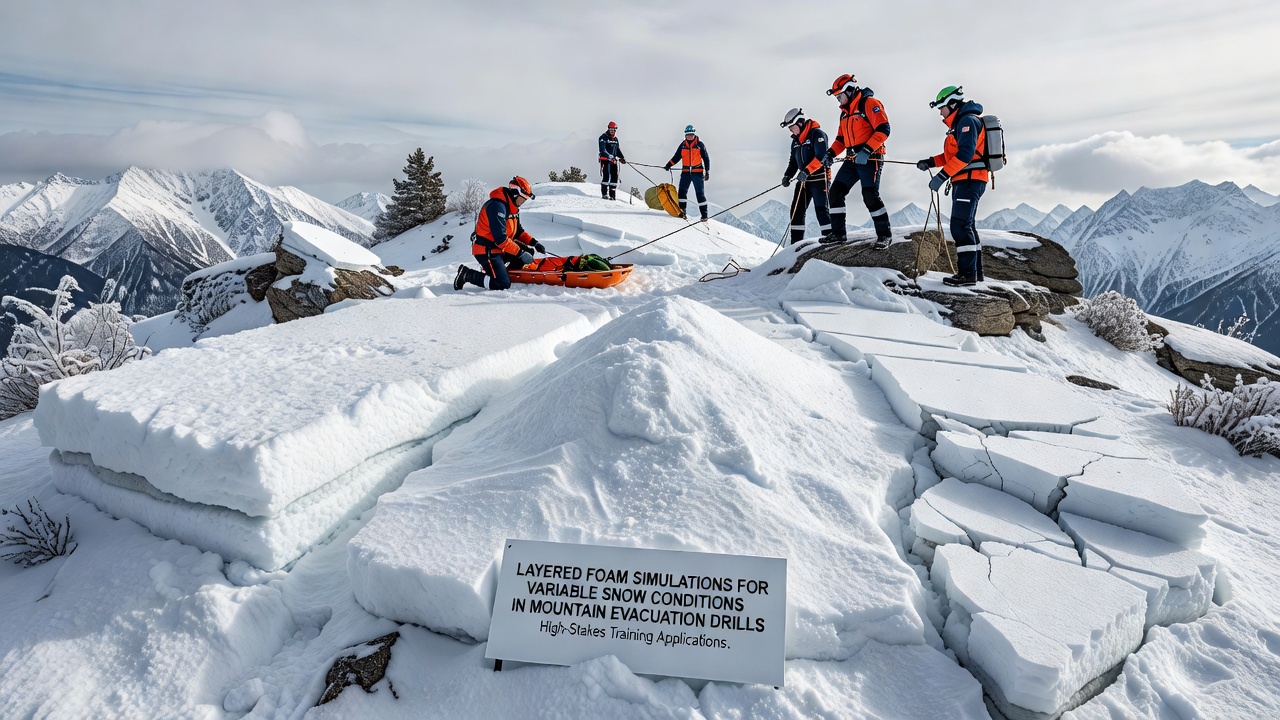
Felix Sullivan · 5 October 2026
Layered Foam Designs and Their Application in Replicating Variable Snow Conditions During High-Stakes Mountain Evacuation Drills
Layered foam designs consist of multiple stacked materials with varying densities and compression properties that teams arrange to mimic the stratified structure of natural snowpacks. Researchers have developed these systems to replicate crust layers, loose powder zones, and wind-packed slabs that rescuers encounter during operations in alpine terrain. Data from material testing facilities shows that foam panels can be calibrated to match the shear strength and settlement rates observed in field measurements of seasonal snow.
Material Composition and Structural Variations
Engineers combine closed-cell polyurethane foams with open-cell viscoelastic layers to create gradients that respond differently under load. One configuration places a rigid base layer beneath softer upper strata so that the assembly collapses in patterns similar to those recorded during avalanche burial simulations. Studies at research institutions indicate that adjusting the thickness of each stratum alters the overall bearing capacity while preserving the visual and tactile cues that trainees rely on for decision-making.
Additional variations incorporate thin membranes between foam sheets to simulate ice lenses that form after freeze-thaw cycles. These membranes alter heat transfer and friction characteristics without introducing actual water, which simplifies indoor facility maintenance. Figures from controlled experiments reveal that the resulting structures maintain stability across temperature ranges typical of indoor training halls yet still fracture along predictable planes when subjected to probe or shovel loads.
Integration Into Evacuation Drill Scenarios
Training centers now embed these foam assemblies into modular platforms that crews reposition between successive exercises. During a typical session, participants navigate sections representing shallow sluff, deeper cohesive slabs, and transitional crusts that demand distinct extraction techniques. Observers note that the consistent repeatability of the foam setups allows instructors to isolate specific variables while maintaining the overall complexity of a real mountain rescue.
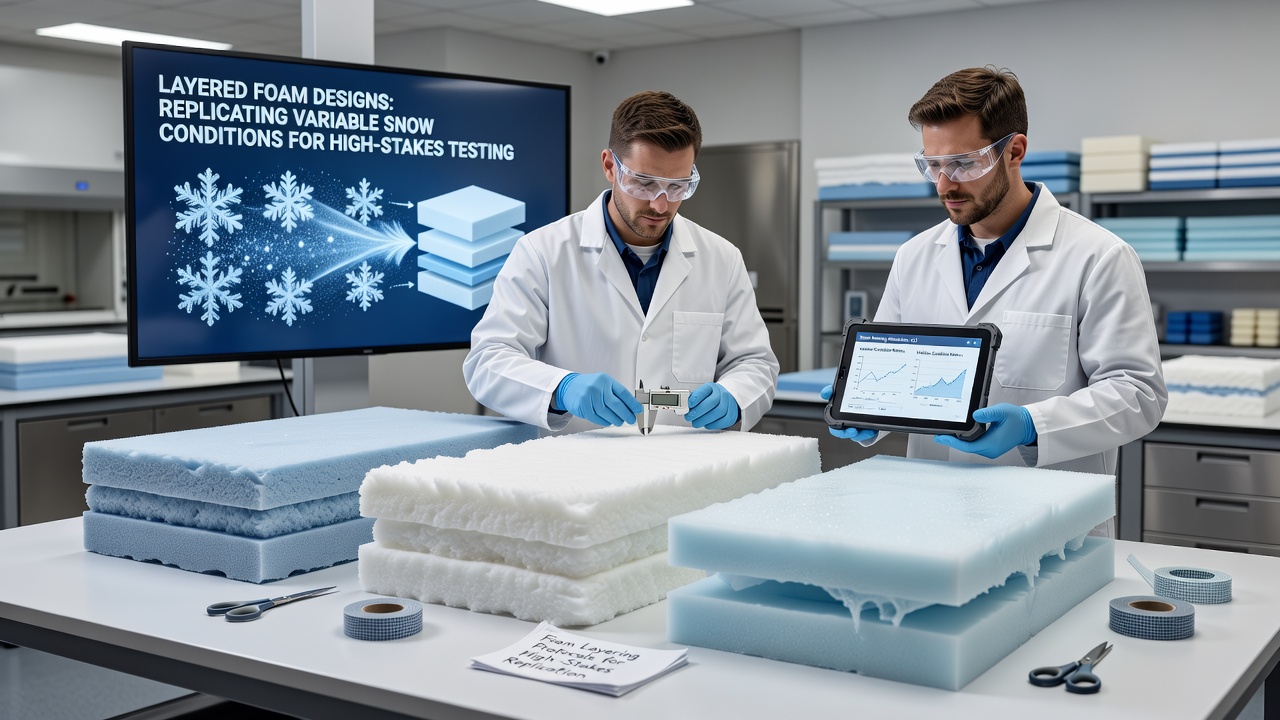
Coordinated drills scheduled for October 2026 will incorporate updated foam configurations that reflect recent snowpack data collected from multiple mountain ranges. These exercises focus on time-critical patient packaging and rope-system deployment across surfaces that shift under the weight of multiple rescuers. The platforms include embedded sensors that record load distribution and settlement, providing quantitative feedback that complements visual assessment by team leaders.
Performance Metrics and Comparative Testing
Comparative trials conducted by mountain safety organizations have measured the correlation between foam behavior and natural snow under identical loading sequences. Results indicate that layered assemblies reproduce the progressive failure modes observed in field pits, including localized collapse and lateral displacement. Teams using these systems report that the feedback during probing and digging aligns closely with conditions documented in accident reports from previous seasons.
Academic papers published through university engineering departments further document how pore structure within individual foam grades influences air escape rates during compression. This property affects the audible and tactile response when rescuers apply shovels or mechanical probes, supplying an additional training cue. Data compiled across multiple sites demonstrates that standardized foam batches can be shipped between facilities while preserving consistent performance characteristics.
Maintenance and Calibration Protocols
Facilities maintain calibration schedules that involve periodic compression testing and visual inspection for surface wear. Replacement panels are selected according to documented density specifications so that the overall stratigraphy remains within acceptable tolerances. Industry reports from trade associations note that these procedures reduce variability between training sessions and support longitudinal studies of rescuer performance over repeated exposures.
Supply chains for specialized foam grades have expanded to include manufacturers in North America and Europe, allowing programs to source materials that meet regional safety standards. Collaboration with material scientists continues to refine bonding techniques that prevent delamination during repeated heavy use.
Conclusion
Layered foam designs now form a core component of indoor and hybrid training environments that prepare teams for variable snow conditions. The ability to replicate specific stratigraphy supports repeatable drills that emphasize both technical skills and situational awareness. As programs prepare for upcoming exercises in October 2026, ongoing refinement of these materials continues to align simulated surfaces with the physical properties measured in operational settings.